ServicesRoof Inspections
Roof Inspections in St. Augustine, Shown to You Step by Step
We go over your roof slope by slope, check the attic where we can reach it, and photograph every problem along with the parts still doing their job. You get the pictures, a plain explanation and an honest sense of what needs attention now and what can wait.
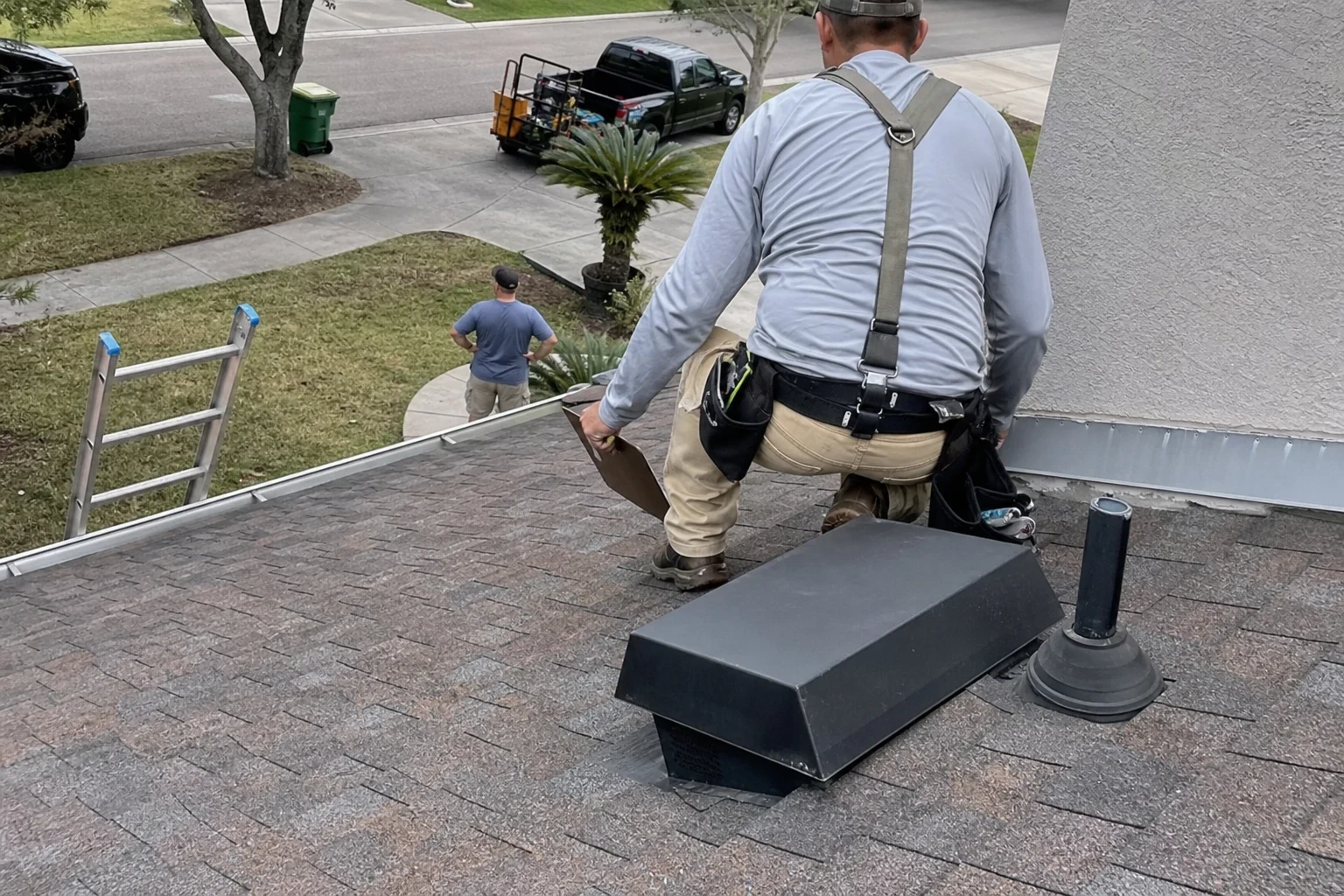
Why have your roof looked at
Leaks rarely begin with one big failure. More often, the rubber collar around a plumbing vent cracks after years of sun. Metal flashing along a wall rusts through at a seam. The south and west slopes lose their protective granules long before the shaded side shows any wear. Caught early, each of these is a small repair. Left alone, they end in wet insulation and a stained ceiling.
We've been in business since 1995, and one thing hasn't changed in all that time: most homeowners never get to see what's up there. So we bring it down to you. Every finding gets a close-up photo of the problem and a wider shot that shows exactly where it is on your home.
An inspection is worth having before you buy or sell, when your roof is past its first decade, after a hurricane or a strong summer storm, or the moment a spot shows up on a ceiling.
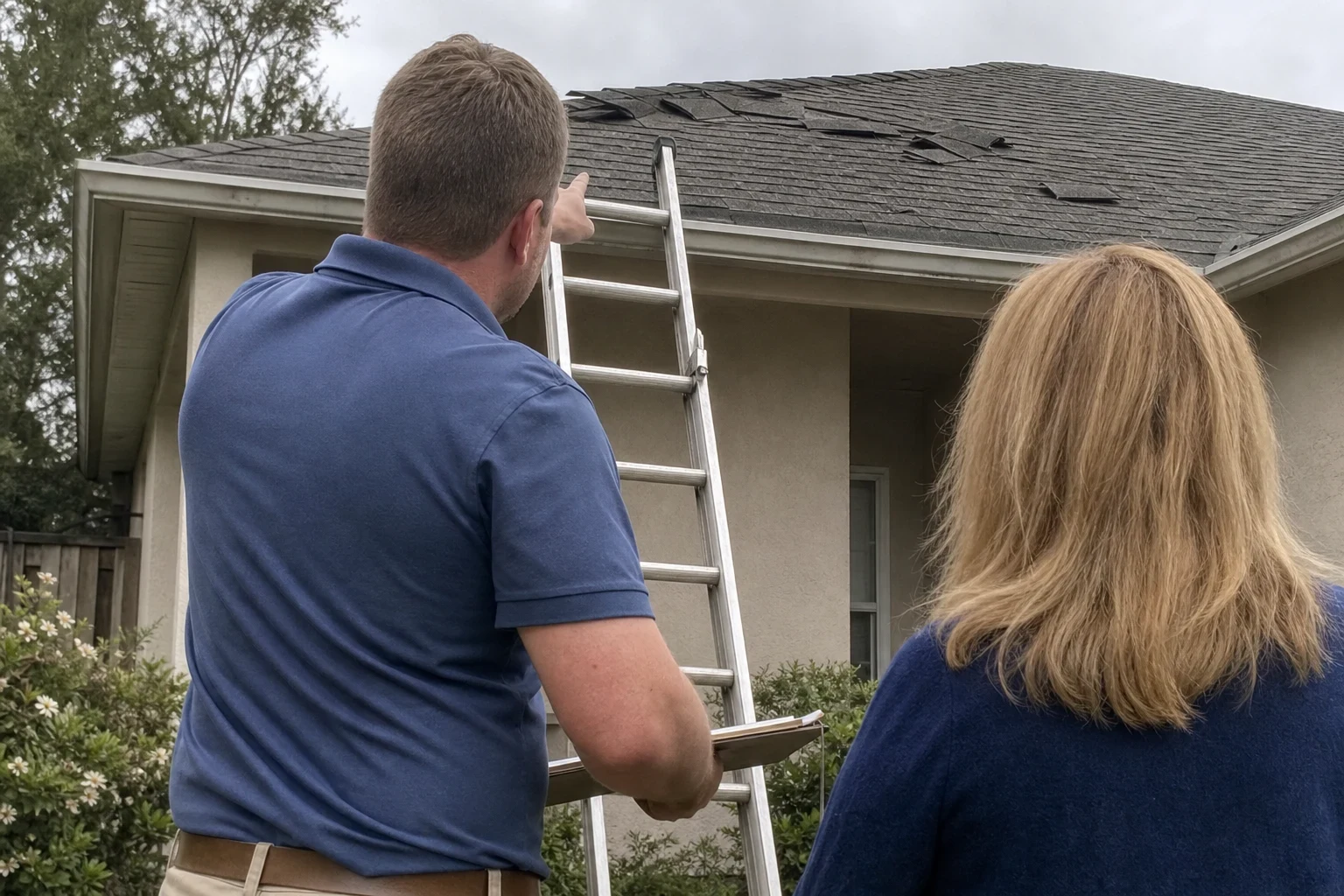
What we check on your roof
- 01
Shingles, tile or metal
We look for creased or lifted shingles, worn patches where the granules are gone, cracked or shifted tile, and backed-out screws or dried sealant on metal panels.
- 02
Flashing and penetrations
Vent boots, skylights, chimneys and wall flashing cause more leaks than anything else on a roof. Salt air speeds up corrosion on metal, so we study every joint and edge.
- 03
Attic and roof deck
Inside, we look for pinholes of daylight, dark water marks on the wood, flattened or damp insulation and any mold. On the roof, we note spots that feel spongy underfoot, which usually means the deck below is rotting.
- 04
Airflow
An attic that can't breathe bakes shingles from underneath and ages them early. We make sure the soffit and ridge vents are clear and moving air.
- 05
Gutters and runoff
When gutters fill with debris or pull away from the fascia, water can back up and soak the roof edge. We write down what we see, and our gutters service can handle any fixes.
- 06
Your photo report
Every image is labeled and grouped into fix soon, keep an eye on and in good shape. The report is yours to keep for your records, your insurer or a buyer.
Questions about Roof Inspections?
Call(904) 621-6670Signs your roof is due for a look
Discoloring overhead
A yellowish or tan blotch on drywall means moisture found a way in. Water usually runs along the decking or a rafter before it drips, so the real entry point tends to sit higher up the slope than the stain.
Grit at the downspouts
If you see coarse, sandy grains washing out of the gutters, your shingles are wearing down and losing their sun protection.
Debris in the yard after wind
A loose shingle, a strip of ridge cap or a broken tile corner on the grass means something up top has let go, and its neighbors may be loose too.
Moss taking hold
Black streaks are usually algae and mostly a looks issue. Moss is a different story, since it keeps the surface wet and can pry up shingle edges.
An insurer or buyer wants answers
Insurance companies and home buyers often ask about the condition of an older roof. Dated pictures settle the question.
How your inspection goes
- 1
We talk first
On the phone we ask how old the roof is, what it's made of, what you've noticed and where the attic hatch is. Then we pick a time that suits you.
- 2
Ground walk, then up top
We circle your home first, studying rooflines, edges and gutters. If the roof is safe to walk, we climb up and cover it section by section, placing our feet carefully on tile so we don't break anything while checking it.
- 3
A look from inside
If you're comfortable with it, we head into the attic to check the wood above, the insulation and the vents. Slow leaks leave marks up there well before a ceiling stains.
- 4
Sitting down with the pictures
Before we pack up, we go through each image with you. We explain what it shows, how soon it matters and what a fix would take.
- 5
You decide what's next
If something needs work, we give you a free, no-obligation estimate for the roof repair or other job. If the roof is sound, we say so plainly.
What affects the cost of an inspection
Our post-storm inspections are free. For a routine inspection, we tell you over the phone what's involved and what it costs before we ever arrive. Any estimate for follow-up work is free, and financing is available.
- Size and shape
- A plain gable roof is quick to cover. Dormers, valleys and multiple levels take more time to check properly.
- Steepness and height
- Steep pitches and two-story homes need more safety gear set up before anyone walks them.
- What the roof is made of
- Tile calls for slow, deliberate footing. Metal means checking every screw and seam.
- Getting into the attic
- A pull-down ladder in the garage is simple. A small hatch in a closet or a cramped space with low clearance takes longer.
- Report detail
- A report for a home sale or an insurance file includes more images and written notes than a routine check.
Roof inspection questions
How long does a roof inspection take?
That depends on your roof's size, its material and how easy the attic is to reach. We give you a reasonable window when we schedule so you can plan around it.
Do I need to be home?
We'd really like you to be. Someone needs to let us into the attic, and going through the findings together is the most useful part of the visit.
Will the inspection turn into a sales pitch for a new roof?
It shouldn't, and with us it won't. Many inspections turn up a handful of small items or nothing at all, and we tell you exactly that. Roof replacement only comes up when the photos show wear that repairs can no longer keep up with, and you'll see that wear for yourself.
Can the photos help with an insurance claim?
Yes. Dated, labeled images make damage easy to see, and on storm claims we work directly with your insurance adjuster. The adjuster decides what's covered, but we make sure they see everything we found. Our storm damage repair page explains more.
How often should my roof be inspected?
Once a year is a sensible routine, ideally in spring before hurricane season begins in June. It's also wise to have it checked after any strong storm, even when nothing looks off from the ground.
Find roof problems while they're still small
We serve homeowners in St. Augustine and nearby areas including St. Augustine Beach and World Golf Village. One call puts a visit on the calendar, and after a storm the inspection costs you nothing.