ServicesStorm Damage Repair
Storm Damage Repair in St. Augustine, With Every Step on Camera
After a storm, you want to know two things: is your roof still keeping water out, and what happens next. We inspect it for free, take pictures of what the wind and rain did, and repair it in the order that protects your home first.
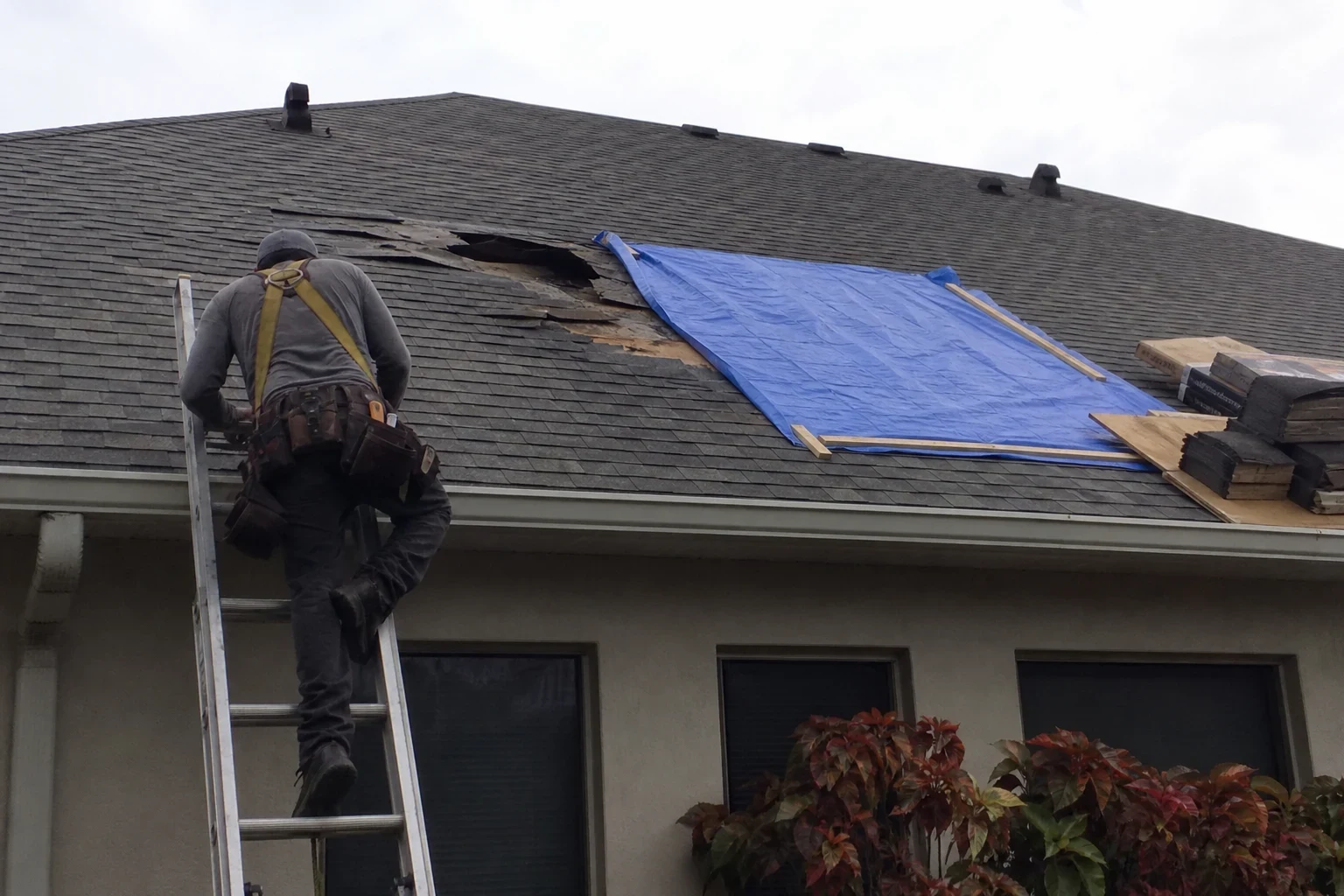
When a storm leaves your roof in rough shape
The damage a storm leaves behind tends to be scattered and small. You might have a row of shingles whose seal strips let go, a ridge cap peeled back at one end, a cracked tile or a metal panel with a fastener pulled loose. Any of those lets wind-driven rain slip in sideways, and the stain on your ceiling may take weeks to appear.
Our job is to find all of it, show it to you and fix it properly. For each damaged spot we take one picture from far enough back to show where it sits on the roof and another up close, so you, your adjuster and our crew are working from the same record.
We have been in business since 1995, repairing roofs through hurricane seasons, tropical storms and the nor'easters that push rain under shingles along the coast.
What the work includes
A full roof walk, not a glance
We check every slope, the ridge, valleys, flashing around chimneys and vents, and the drip edge. We also look in the attic when we can, because wet decking and stained rafters tell us where water actually traveled.
Photos you can keep
You get a labeled set showing each damaged area before we touch it, during the repair and after. It is yours to share with your insurance company or keep for your records.
Temporary dry-in when needed
If water can get in before permanent repairs are scheduled, we secure a tarp or temporary covering over the opening. That gets documented too, so your claim shows you acted to limit further damage.
Help with your adjuster
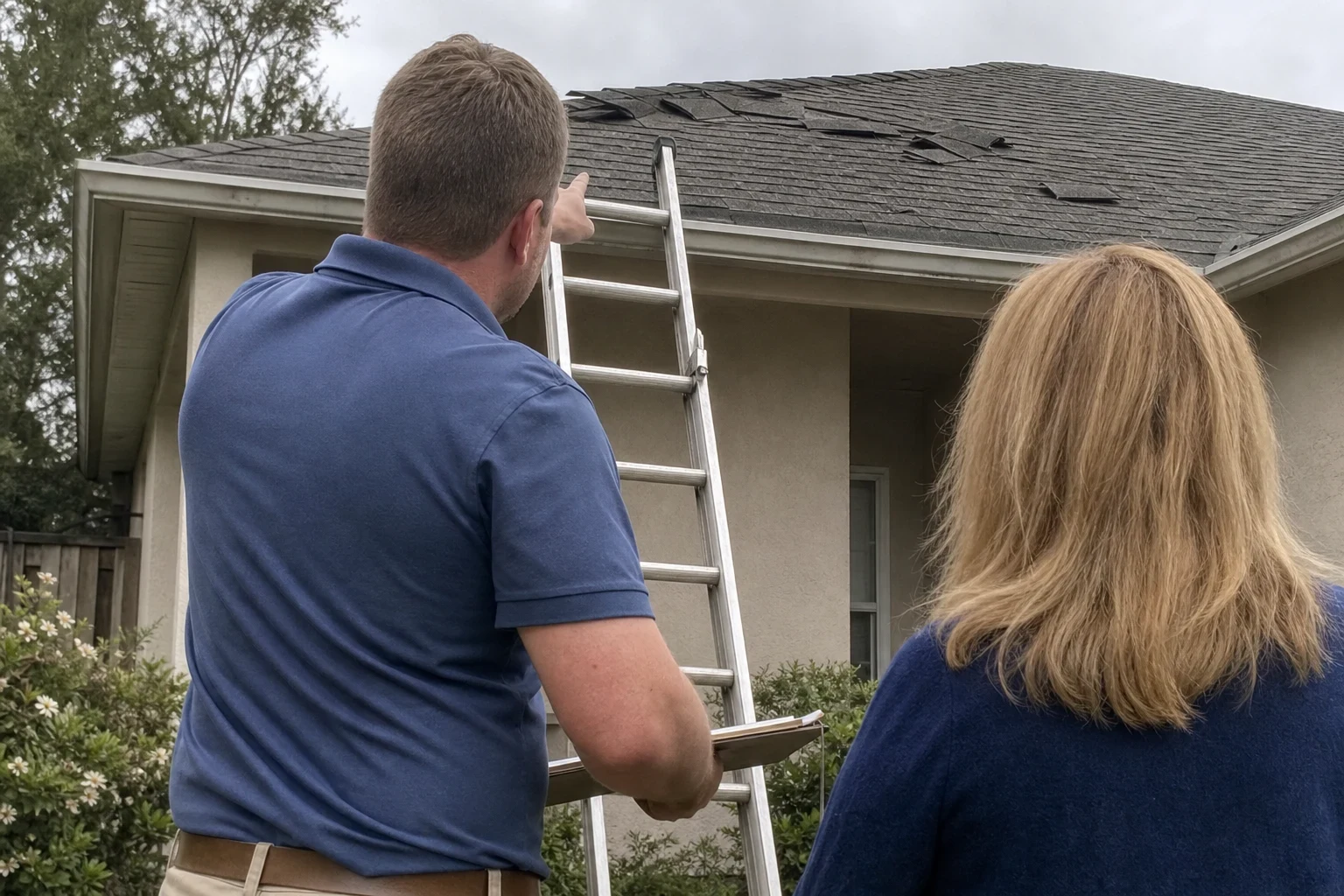
On a storm claim, we deal with your insurance adjuster ourselves rather than leaving you in the middle. If they want to see the damage in person, we can be there to point out each spot and describe the fix we have in mind. Coverage decisions stay between you and your insurer.
Permanent repairs to code
Replacement shingles are matched as closely as the market allows, then sealed and nailed to the Florida Building Code. Damaged underlayment, flashing and decking are replaced, not covered over.
Signs your roof took more of the storm than it looks
- Shingles in the yard or gutters
- Even a few pieces on the ground mean something above is open. Granules piling up at downspouts point to shingles that were scoured or creased.
- Lifted or creased tabs
- A shingle that flapped in the wind can lie back down looking normal. The crease line across it means the seal broke, and the next storm can take it off.
- New ceiling stains or a musty attic
- Water often enters at one spot and drips somewhere else. A fresh stain after a storm is worth a look even if it is small and dry by morning.
- Bent flashing or loose metal
- Flashing around vents and walls, or ridge caps on a metal roof, can lift and let water run under. Rattling or whistling in the wind is a clue.
- Cracked or shifted tiles
- Flying debris can crack tile without moving it, leaving the underlayment beneath to take the rain alone. Slipped tiles along the eaves are another tell.
How a storm repair goes, from first call to final walk-through
- 1
Free post-storm inspection
We schedule a visit, walk the roof and attic, and photograph everything we find. You get a clear explanation of what is storm damage and what is ordinary wear, because the difference matters to your claim.
- 2
Stop the water first
If any area is open, we dry it in with a temporary covering that day or as soon as it is safe to work up there.
- 3
Estimate and claim support
You receive a free, no-obligation estimate that lists each repair. If you file a claim, we go over our findings with your adjuster so nothing gets overlooked.
- 4
Repair day
We cover your landscaping and protect the driveway, remove damaged materials, check the decking underneath and install new materials. We pull the permit when the scope calls for one.
- 5
Cleanup and the finished record
The old material gets hauled off, and we sweep the grass, beds and driveway with a magnet so no loose nails end up in a tire or a bare foot. Then you get pictures of each repaired area to keep with your claim file.
What shapes the cost of a storm repair
Two roofs hit by the same storm can need very different repairs. Your estimate depends on what we actually find, and the pictures show you why each line is there. If insurance covers part of the work, your out-of-pocket cost usually comes down to your deductible and anything outside the claim. Financing is available if you need it.
- How much of the roof was hit
- A few replaced shingles is a small job. Damage across several slopes may make a full roof replacement the more sensible answer, and we will tell you plainly if we think so.
- What is under the surface
- Plywood that stayed wet turns soft and will not hold nails, so it gets swapped out before anything new is laid over it. That kind of damage usually stays hidden until the top layer is stripped, which is why we stop, photograph it and talk with you before it goes on the bill.
- Roofing material
- Asphalt shingles, concrete or clay tile and metal panels each have their own repair methods and parts. Finding a close match for an older shingle or tile profile can also affect the price.
- Pitch, height and access
- A steep slope or a second story means harnesses, roof jacks and more careful staging, so the work moves slower and takes more labor.
Answers for homeowners after a storm
- Do I file the claim before or after a roofer looks at it?
- Either order works. Many homeowners like to have our free inspection done before filing, so they know whether the damage is worth a claim and already have pictures in hand when the adjuster calls. We will tell you honestly what we see, even if it is not worth filing.
- Will you meet with my adjuster?
- Yes, that is a regular part of how we handle storm claims. We can be at your home when the adjuster visits and go over everything we documented. We do not act as your adjuster or decide coverage, but we make sure nothing we found gets missed.
- Can I wait until the next dry spell to fix it?
- A small lifted shingle can sometimes wait a short while, but any opening should be covered right away. Water that reaches the decking spreads quietly and turns a repair into a bigger one. If you are unsure, we can look and tell you what can wait.
- How do I know the damage is really from the storm?
- Storm damage has a look: fresh creases, clean breaks, missing pieces and scuffs from debris. Old wear looks different, with curled edges and long-faded granules. We show you both side by side and label which is which.
- Do you work outside the city?
- Yes. We handle storm repairs across the area, including St. Augustine Beach, St. Augustine Shores, Butler Beach, World Golf Village and Nocatee. The Service Areas page lists more.
Had a storm come through? Let us take a look
We will walk your roof, show you what we find and explain your options before any work starts. If gutters came down too, we can look at those on the same visit.