ServicesRoof Replacement
Roof Replacement in St. Augustine
Once a roof is past saving, we strip it to the deck, repair whatever has gone soft underneath and build a new one. You see pictures from every stage, including the layers your new shingles will cover, so you know what went onto your home and why.
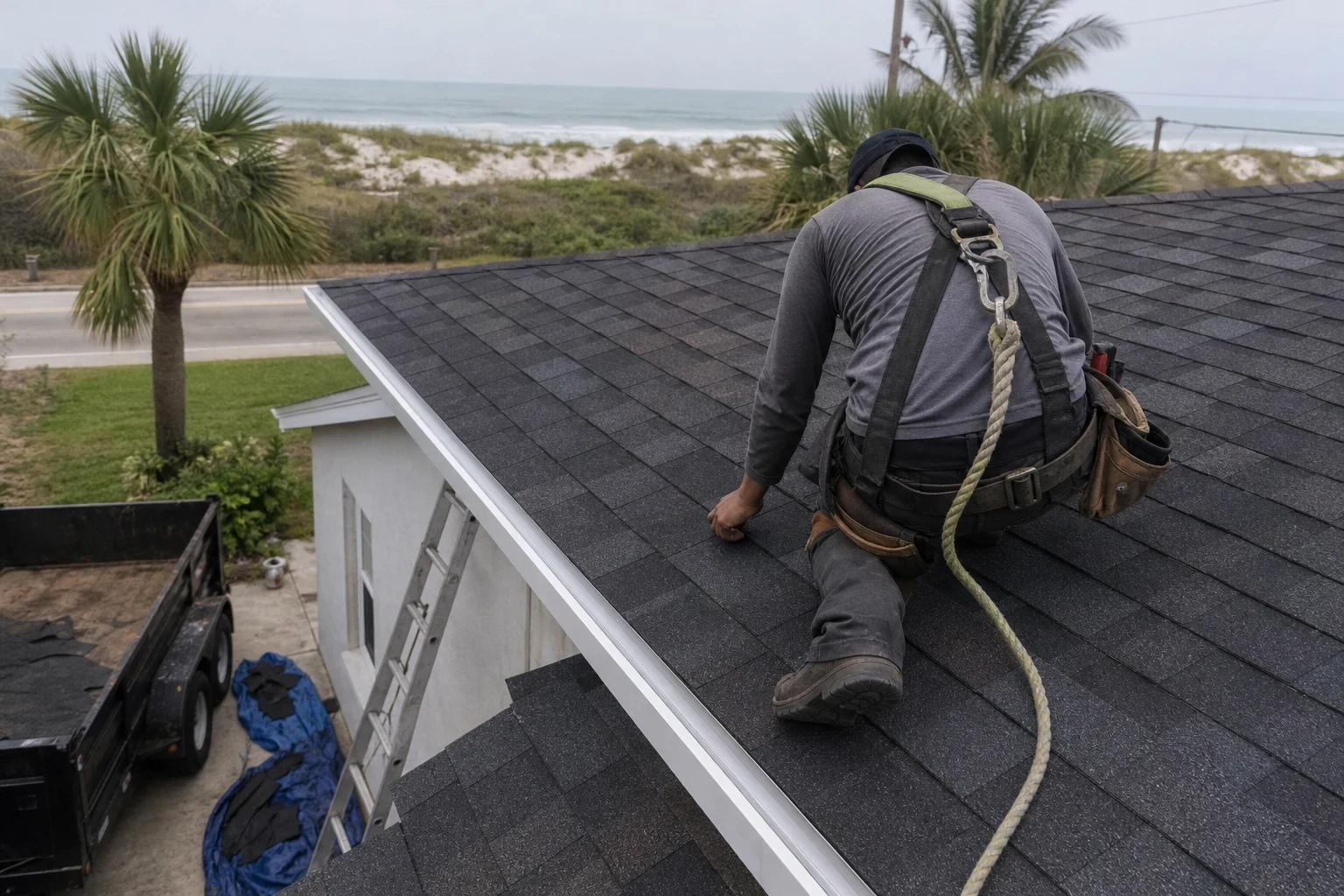
A New Roof You Can Actually See Into
The parts that decide how long a roof lasts are the parts nobody sees after the crew leaves. That means the plywood deck, the way each row of underlayment overlaps the one below it, and where the flashing tucks against walls and chimneys. Since you can't climb up and check those yourself, we photograph them as we go: the old roof before it comes off, the bare deck, the fresh underlayment and the finished ridge.
A new roof makes sense when the old one has worn out across most of its surface, or when damage is scattered too widely for a repair to hold. When patching the problem area would serve you just as well, we tell you that plainly, and our roof repair page explains how that work goes. We've been in business since 1995, and neighbors often mention that an honest repair-or-replace answer was the reason they called us back.
What Your Roof Replacement Includes
Tear-off down to bare wood
Every old shingle and every layer of felt comes off. Roofing over an existing layer adds weight and buries whatever is wrong underneath, so it isn't something we do.
Deck inspection and board repair
With the deck open, we walk it board by board, feeling for soft spots, rot and plywood that has started to separate. Each sheet we swap out is photographed and shown to you before anything goes over it.
Fresh underlayment and new metal
New underlayment covers the whole roof, with added protection in valleys and around every pipe and vent. Drip edge and flashing are replaced too. Coastal salt air corrodes old metal, and reusing it is a common reason new roofs leak early.
Attic airflow set right
An attic that can't breathe bakes shingles from underneath and holds moisture. While the roof is open, we check the intake and exhaust vents and balance them so the new roof isn't fighting trapped heat.
Permit, inspections and a clean yard
We pull the permit and meet the inspector. At the end of each work day the crew gathers up scraps and old shingles, then sweeps the driveway, walkways and flower beds with a magnetic roller so no stray nails are left behind.
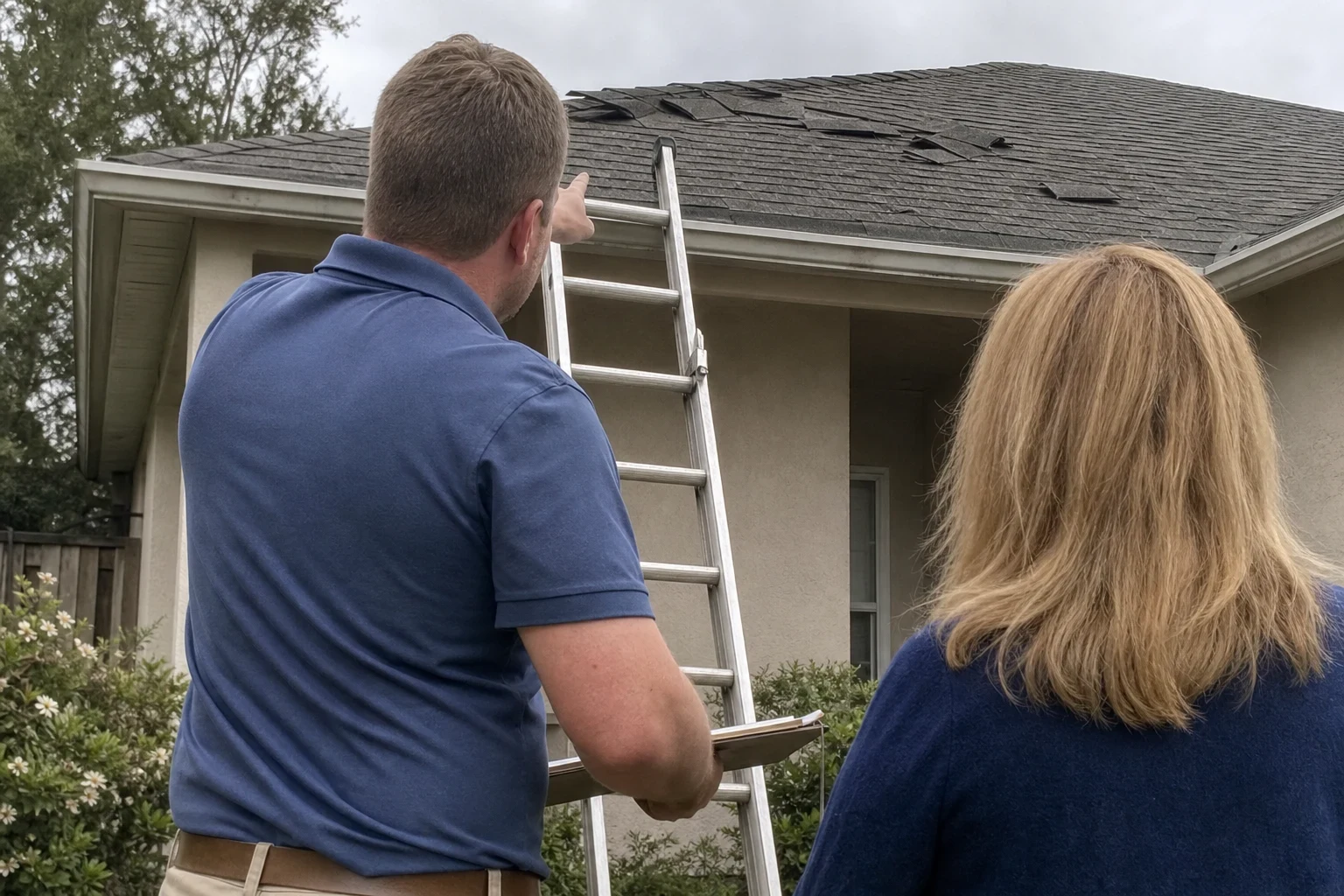
Signs Your Roof May Be Ready for Replacement
- Grit collecting in gutters
- Shingles lose their mineral granules as they age. When you find sandy grit at the bottom of a downspout after a rain, the protective surface is wearing away.
- Shingles curling across whole slopes
- One lifted tab can be fixed. Edges cupping or cracking over large sections mean years of sun have dried the shingles out.
- Leaks that move around the house
- A single drip over one room is usually a repair. When a fresh ceiling stain turns up in a different spot every rainy season, the underlayment beneath the shingles has likely given out.
- A dip or a spongy feel
- A roofline that sags, or decking that gives underfoot, often means water has reached the wood. That is worth looking at soon, before the rot spreads to rafters.
- Rust on flashing and vents
- Reddish streaks below vent pipes or along wall flashing show the metal is breaking down. Near the coast this tends to show up on older roofs all at once.
- Wind loss on several slopes
- If a storm stripped shingles from more than one side, the sealant strips may be failing everywhere. Our storm damage repair page covers how we sort that out first.
How the Job Runs, Start to Finish
- 1
Free estimate on your roof
We climb up, check the attic if it's reachable and walk you through pictures of what we saw. The written estimate breaks the work into separate line items so you can see where the cost comes from.
- 2
Choosing materials and a start date
We sit down with you on shingle styles and colors, then order materials and set a date. If a metal roof interests you, we can price that alongside shingles.
- 3
Tear-off day
Tarps go down over your shrubs and beds, the old roof comes off and we check the deck. You get photos of the bare wood and any boards we replaced before the new layers go on.
- 4
Installation, inspection and walk-through
Underlayment, flashing, shingles and ridge cap go on, and the building inspector signs off. Then we walk the property with you and hand over the full photo record of the job.
What Moves the Price of a New Roof
We price each roof only after we've been up on it. Your estimate lists the parts of the job separately, so you aren't left guessing about what a total includes. Financing is available if spreading the cost out works better for you.
- Square footage and slope
- Roofs are measured in squares, and each added square needs its own share of shingles, underlayment and crew hours. Steeper slopes call for harnesses and roof jacks, which slows the pace.
- What the deck looks like
- Nobody can be sure until the old roof is off. Your estimate spells out how replacement sheets are priced, and we document every board we change so the count is clear.
- The materials you pick
- Architectural shingles, upgraded underlayment and metal panels differ in cost and in how long they last. We compare them on your roof, not in the abstract.
- Angles and openings
- Valleys, dormers, skylights and vent pipes each need flashing cut and fitted by hand. A plain gable roof takes less time than one with many corners.
Roof Replacement Questions
- How long will the work take?
- Most homes take one to three working days once materials are on site. Bigger or more complicated roofs take longer, and an afternoon storm can cost us a day. We give you the plan before we start and let you know if it shifts.
- Do I need to be home during the job?
- No. We like to meet you the first morning and walk the yard together at the end, but you can go to work as usual. The pictures we share let you follow each stage from wherever you are.
- Will my insurance pay for a new roof?
- That depends on what caused the damage and on your policy. When a storm is involved, we work directly with your insurance adjuster and share our photos of the damage. The adjuster decides on coverage, and we explain each step in plain terms.
- Can you repair my roof instead?
- Often, yes. If the trouble is confined to one area and the remaining shingles are still sound, fixing it is usually the smarter use of your money, and we'll tell you so. If you're not sure where your roof stands, a roof inspection is a good place to start.
- What happens to my yard and driveway?
- We cover beds and shrubs, place the dumpster where it does the least harm and run a magnet over the lawn and driveway every evening. If you notice anything we missed, let us know and we'll take care of it.
See What's Under Your Shingles
We'll come out, look your roof over and walk you through what we saw before any price comes up. The estimate is free, with no obligation.